Prospect Gardens Summer Time

Prospect Gardens Summer Time
Summer Scene

Wednesday, August 9, 2023

Wise Hope

Hope is a mind state embedded in our culture.  A prime example of its place in our culture is how Hope was one of President Obama's key slogans during his 2008 campaign. Shepard Fairey, a famous American artist and activist, created a campaign poster featuring a graphic portrait of Obama with the solitary word, HOPE. On May 19, 2022 one of the originals sold for a record breaking $735,000.  For more about the sale hit this link

A more recent example of hope's status is the recent Wisconsin State Journal headline: "Wisconsin hopes millions in opioid-settlement money will save lives."  Another example is an email I recently received entitled "Change the Narrative from Despair to Hope" from Tricycle, an American Buddhist website and magazine.  Large red letters proclaimed "The Earth Needs Our Hope" as an introduction to an interview with Rebecca Solnit, author of  "Not Too Late: Changing the Climate Story from Despair to Possibility.

The Oxford dictionary defines hope as a feeling of expectation and desire for a certain thing to happen. Often the word is used casually to offer support such as "Here's hoping your are well. Underlying the Wisconsin Journal headline, stated above, are some other attributes of hope, as it's commonly used. We expect or desire a certain future outcome. Hope is also commonly associated with optimism; things will turn out alright. Furthermore, hope is often evoked when faced with unpleasant situations such as the opioid crisis, climate crisis, or when faced with debilitating illness. Sometimes if the outcome does not happen, we become discouraged, telling ourselves "what's the use." 

Roshi Joan Halifax

Another perspective on hope that I learned from Buddhism and from tending Prospect Gardens is wise hope. With the pandemic and climate change in mind, Roshi Joan Halifax, Head Teacher, Upaya Zen Center, Santa Fe, New Mexico, discussed wise hope in a post dated April 14, 2020. Here's the link to the post  Wise hope has the following qualities:

  • Acceptance of uncertainty. We never know what is really going to happen.
  • Openness to being surprised or as Roshi Halifax states being "perpetually surprised."
  • Accepting reality or in the Roshi's words "seeing things as they are, including the truth of impermanence…. as well as the truth of suffering—both its existence and the possibility of its transformation, for better or for worse."
  • Understanding that what we do matters, while never knowing when and if what we do will have an impact beforehand.  
  • Trusting that things change; they always do, but we don't know the specifics.
  • Confidence to take action in the face of uncertainty, unpredictability, and constant change.
In short, wise hope is not grounded in expected outcomes, in a desire for certain things to happen, or in naïve optimism that things will change. Neither is wise hope a passive acceptance of what is. Instead, wise hope rests on the belief that we have the agency to create change or at least take the next wise step forward. 

Wendell Barry's poem reflects several aspects of wise hope. The following are excerpts from the poem. Here's the link to the complete poem 
  It is Hard to Have Hope  

It is hard to have hope. It is harder as you grow old,
for hope must not depend on feeling good
and there’s the dream of loneliness at absolute midnight.
You also have withdrawn belief in the present reality
of the future, which surely will surprise us,
and hope is harder when it cannot come by prediction
anymore than by wishing. But stop dithering.
The young ask the old to hope. What will you tell them?
Tell them at least what you say to yourself.

Because we have not made our lives to fit
our places, the forests are ruined, the fields, eroded,
the streams polluted, the mountains, overturned. Hope
then to belong to your place by your own knowledge
of what it is that no other place is, and by
your caring for it, as you care for no other place, this
knowledge cannot be taken from you by power or by wealth.
It will stop your ears to the powerful when they ask
for your faith, and to the wealthy when they ask for your land
and your work.  Be still and listen to the voices that belong
to the stream banks and the trees and the open fields.

Find your hope, then, on the ground under your feet.
Your hope of Heaven, let it rest on the ground underfoot.
The world is no better than its places. Its places at last
are no better than their people while their people
continue in them. When the people make
dark the light within them, the world darkens.

Caring for Prospect Gardens continues to offer lessons about wise hope while echoing the wisdom of Wendell Barry's poem. Thirteen years ago we began creating the Gardens. Our history has been a journey rather than implementing a plan with stated goals and expected outcomes. As the journey unfolded, my hopes for the Gardens were influenced by the realities of the site; to paraphrase Berry's poem, hope was "grounded under my feet." 

We started with a short plan that included shrubs as the Garden's backbone and these remain. Our aspirations were to transform the site into a small prairie. Now the site looks like a fusion of prairie remnants and an English garden: prairie plants, perennials, two cherry trees, a raspberry patch, a few small sculptures, birdhouses, and some chimes, like the one in the above picture.   

The Gardens' journey continued with July 29th work session. Joining Ann B., my wife, and I were Percy (first step), Joyce on the left of the second step, and Ann N. on the right. We are on break  enjoying almond cookies from Whole Foods. Ann B., my wife, also affectionately known as the union boss, ensures we take breaks as I lose track of time. Thank you all for your hard work and for continuing on the journey. 

Our first task, and a testimony to unpredictability, was cleaning up after the previous night's storm that dumped at least 3 inches of rain on Madison (maybe more on the Gardens). There were some minor washouts. Nothing compared to the 2018 deluge that severely eroded a section of the Garden with few plants. Madison City Engineering repaired the damage. Since then grasses and other plants were installed and this time the section held, although some plants were flattened by the rushing water.

Ann N. and I staked plants that were toppled by the rain while Percy pruned the tall forsythia. The forsythia, now at least 10 feet tall, was once just a foot tall and the first to be planted in the Gardens. It marks the passage of time while holding earth in place during storms. 

Joyce 
Everybody weeded. Here's Joyce pausing as she removed clover and Bishops Weed from a section. The sedges and grasses within this section planted several years ago are now mature.   

Behind Joyce is the shade garden started at least ten years ago with a few hostas that a nearby neighbor left at the curb. I just couldn't accept the possibility that they would be garbage in the landfill. Over the years, neighbors and friends have donated more hostas. Jack-in-the pulpits, ferns, and jacob's ladder have been added.

Ann N.
 Ann N. weeded the upper section where Prospect Ave curves into Fox Ave. The columbine plants she donated last fall, failed. We will try again this fall. 

The bottlebrush blazing stars in front of Ann N. are thriving. About two years ago, I removed the ditch day lilies from this section and planted the blazing stars along with other native plants. A friend donated some of the blazing stars from her garden. 

There is a large patch of ditch day lilies on the Regent side. I almost removed them this season but the recent heat spell and poor air quality due to the Canadian wild fires intervened. Plus they hold the soil in place and they were there when trains passed by. I am somewhat reluctant to remove these first inhabitants. 

The Path has its own history which includes steam engine trains. When Emily was in fifth grade at Randall School, I led a project, along with students, to interview Randall graduates. Students did most of the interviews. A ninety year old woman, one of the first Randall school graduates, told a story about how as child she and her friends ran to the Spooner Street bridge once they heard the train approaching. They joyfully shouted as the steam from the train passing under the bridge engulfed them.  

The next six pictures show some current plants along with additional comments. They serve as markers of the Gardens' thirteen year history.

The cardinal plant that joined the Gardens several years before the pandemic. Initially, I planted four in a location at least fifteen feet east from this one. Seeds that resulted from those plants somehow moved west.  Birds?  Wind?  


Golden Rod, initially planted at least 10 years ago, and in the same location. The original one or two plants have expanded into a sizable patch. The brown spots are insects pollinating the blossoms to produce more seeds. 


Another pollinator, the bee, on a Joe Pye blossom. Years ago, friends Gary and Jane, gave me the first Joe Pye clump from their award winning West Bend home gardens. Both Jane and Gary are now in an apartment within a retirement community. Meanwhile, the clump grew and the patch of Joe Pye Weed expanded. I divided the Joe Pye and transplanted them in several other locations.  It's a hardy plant and as you can see, benefits bees. 


One of the four bird houses installed in 2016 and made by a nearby neighbor and his son. This one is surrounded by black- eye susan, phlox, and yellow cone flowers. Black-eyed susan is one of the first planted thirteen years ago. They have spread throughout the Garden and in recent years needed to be thinned out because of their aggressiveness.  


I am conflicted about these  colorful phlox. I planted a few at least ten years ago and they have now spread throughout the Garden. 

They add beautiful color.  Yet, they are not the native phlox found in a prairie. Sometimes, I feel like removing some. I hesitate because of their beauty and how they have staked a successful claim to the site. They remind me of thriving homesteaders that have a right to remain.

Several cup plants, like this one, have moved into the Garden, migrating on their own from a patch just across the Fox Avenue entrance to the Southwest Path. I first noticed this one on the Fox side, maybe three years ago. Ernie, who then owned the adjacent home, planted cup plants along the entrance to the Path. The current owners, Katie and Parker, have maintained the initial patch of cup plants. A few cup plants also migrated to a section adjacent to the north section of the bike path. 

Anna Blasczyk 

Reflecting about wise hope reminds me of my mother, Anna. Here she is in 1994 at the age of 88. She was a widow since 1949. She sold the family farm in 1962 and lived in Pulaski  until her death in 1998.  

My mother faced many challenges as she raised her family of 14, before and after the death of my father. Her life was not easy.  At our baby shower for Emily in 1984, a friend asked how she managed to raise so many children. My mother replied: "You just need to get up and do something." I never heard her complain about her life or say she hoped for something better. 

I end with this 1936 Carl Sandburg poem. Perhaps take time to reflect about what it says about hope.

Hope is a Tattered Flag

Hope is a tattered flag and a dream of time.

Hope is a heartspun word, the rainbow, the shadblow in white

The evening star inviolable over the coal mines,

The shimmer of northern lights across a bitter winter night,

The blue hills beyond the smoke of the steel works,

The birds who go on singing to their mates in peace, war, peace,

The ten-cent crocus bulb blooming in a used-car salesroom,

The horseshoe over the door, the luckpiece in the pocket,

The kiss and the comforting laugh and resolve—

Hope is an echo, hope ties itself yonder, yonder.

The spring grass showing itself where least expected,

The rolling fluff of white clouds on a changeable sky,

The broadcast of strings from Japan, bells from Moscow,
Of the voice of the prime minister of Sweden carried

Across the sea in behalf of a world family of nations

And children singing chorals of the Christ child

And Bach being broadcast from Bethlehem, Pennsylvania

And tall skyscrapers practically empty of tenants

And the hands of strong men groping for handholds

And the Salvation Army singing God loves us...


Published in 1936 collection The People,


Thank you. Enjoy the passing summer.


Thursday, June 29, 2023

"Recognizing the Good"

Buddha On Our Deck
These remarks echo a series of talks, entitled "Recognizing the Good" by Mark Nunberg, one of the Guiding Teachers at the Common Ground Meditation Center, Minneapolis. I have attended several of his retreats, held in Madison. To listen to the first 44 minute talk click here. Mark, a nationally known teacher grounded in the Buddhist tradition, lays out practices to counter our tendencies to see what's wrong. You could argue there is a lot wrong these days. 

Reflecting Buddhist inspired teachings, Mark encourages accepting what's wrong (including our own faults) while recognizing and appreciating what's good in our lives. Recognizing the good includes celebrating and sharing the good with others. Sharing is important because doing so acknowledges that we are interdependent; plus the sharing of individual good fortunes contributes to humanity's overall well being. It's like there is a reserve of well being and individual sharing adds to this reserve. 

Lori and Dave, two friends, have a daily practice that puts Mark's suggestions into practice. Every morning Lori and Dave recognize the good by telling each other what they are grateful for. Mark suggests we do the same before falling asleep. Keeping a gratitude journal is another of  Mark's suggestions, as are sharing the good when we visit friends, and after completing a group project celebrate (or at least verbally acknowledge) the good that has been accomplished. I'm planning on doing this during the next Prospect Gardens work session. Much good is the result of our collective efforts to maintain a restored green space with its many environmental and social benefits.   

As Mark points out, and as the following poem proclaims, noticing and celebrating the ordinary things in life is an important part of recognizing the good.  

In Praise of the Ordinary (Richard Gilbert)

I lift my voice this day in praise of the ordinary:
The endless routines of living:
Life's everyday rituals;
The boring things we do to exist;
The monotonous getting up in the morning;
Eating, working, going to bed at night;
Moving to and fro to make a living;
Enjoying a life.

I celebrate the simple things,
The things to which we give not a second thought:
The miracle of breathing;
The act of eating;
The cadences of daily speech;
The sounds of nature as a simple backdrop
To our complicated lives.

I celebrate leaves falling from the trees
And snow falling from the skies;
The brave persistence of the grass,
And the sleeping flowers of the fields.

Enough, I say, of big things and great things,
And extraordinary things, and ultimate things.
I celebrate the ordinary.
I lift my voice in praise.

I lift up my voice in praise and thanks to those who tended Prospect Gardens on June 17th.  As a result of the ordinary act of weeding, you generated a lot of good, that I now gladly share with the virtual universe.

Starting on the left, first row are Becky, Percy and Gregory.  Next to my left is Shelia and then Erica, with the big, wonderful smile.  Ann, my wife and constant volunteer, took the picture. Not pictured is Laura, another long time volunteer. Percy is another regular Prospect Garden volunteer  and she tends other prairie gardens as well.

Thanks Erica and Shelia for returning and a special thanks to Gregory for being a regular this season. Becky, you will always be welcomed back.


Here's Jim who had to leave before the group picture.  He's tackling weeds with diligence and a happy smile. Thanks Jim for again joining us.


And not to be forgotten is Alice, who also had to leave before group picture time. Thanks Alice for again joining us and adding to the collective good.

Her daughter just graduated from West High School. More good accomplished, worthy of being shared and celebrated.


Here's Erica. Looks like she is scanning for more weeds while contributing to the collective good. 
Just had to include this picture of Gregory, enjoying a cookie and appearing to be in a reflective mood.  Gregory, Percy, Laura, and I tackled Bishops Weed that took over a large section on the Fox side of the Gardens. We cleared the section while expecting the return of these tenacious plants. 

Perhaps Bishops Weed is an example of a good that has gone astray. Bishops Weed was sold for many years as a good ground cover. Yes, indeed it is a good cover. On the other hand, it's aggressive and out-competes other plants. Early spring native plants don't have a chance of surviving an invasion of Bishops Weed. 

Enough of Bishops Weeds' negativity. Here's Becky doing  the good work of weeding. 

Becky and Gregory completed the Wisconsin Master Naturalist Program, a great example of doing the good. This UW Madison Extension program promotes awareness, understanding, and stewardship of the natural environment. Gregory and Becky completed 40 hours of training and are now part of a statewide network of well-informed volunteers dedicated to conservation service within their communities. 

The Gardens are starting to showoff their beauty. Passersby, some on bikes, often shout out "thank you" and other expressions of gratitude as we tend the Gardens. These expressions of gratitude remind me that our acts of tending the Garden benefit many people.

Here's four pictures of the emerging beauty, along with quotes about goodness, for your reflection.

Elderberry Blossom 

In goodness there are all kinds of wisdom. (Euripides)


Purple Poppy-Mallow


Do not disregard the accumulation of goodness, saying, 'This will come to nothing.' By the gradual falling of raindrops, a jar is filled. (Attributed to Gautama Buddha)


If there are dreams about a beautiful South Africa, there are also roads that lead to their goal. Two of these roads could be named Goodness and Forgiveness. (Nelson Mandela)

* Early Milk Weed blooms that will feed any migrating Monarch Butterflies and other insects. More good for the universe.


Lance-Leaf Coreopsis 


Do your little bit of good where you are; it is those little bits of good put together that overwhelm the world. (Desmond Tutu)

I end with the following poem. May you experience this blessing as summer unfolds while recognizing, celebrating, and sharing with others the good in your life.

Blessing  (Carrie Newcomer) 

May you wake with a sense of play,
An exultation of the possible.
May you rest without guilt,
Satisfied at the end of a day well done.
May all the rough edges be smoothed,
If to smooth is to heal,
And the edges be left rough,
When the unpolished is more true
And infinitely more interesting.
May you wear your years like a well-tailored coat
Or a brave sassy scarf.
May every year yet to come:
Be one more bright button
Sewn on a hat you wear at a tilt.
May the friendships you’ve sown
Grown tall as summer corn.
And the things you’ve left behind,
Rest quietly in the unchangeable past.
May you embrace this day,
Not just as any old day,
But as this day.
Your day.
Held in trust
By you,
In a singular place,
Called now. 


Monday, May 22, 2023

Collective Effervescence, Awe, and Wonder

Picture from the WEB

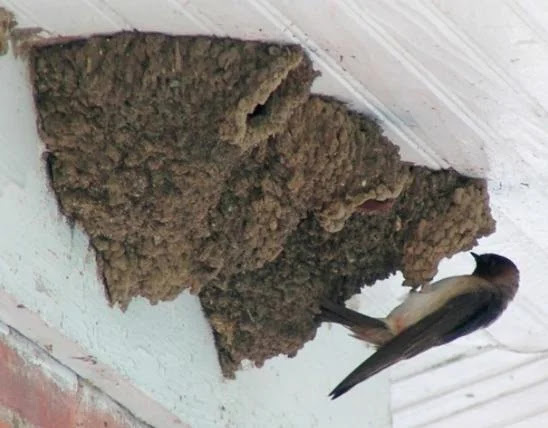
Now that May is here during my morning Qigong, a pair of swallows often swoop past my window, sometimes diverting my attention and energy. Recently, as the pair dipped and dived, a childhood memory surfaced. I returned to my childhood on an early May day when hundreds of barn swallows whirled near the gabled roof barn of our family farm. The swallows returned for another season to raise their young either in last year's nests (now lined with new material) or new ones molded from mud and spit, and located high up under the eves of the barn. I watched in awe as these graceful birds danced in the air, eventually landing to enter their sturdy mud homes. This one is feeding its young.

Nests were close to each other forming a harmonious colony that spanned the eves of the barn. No bird staked out and defended a territory. Neighbors got along and seemed to talk with each other. The chatter was constant. Perhaps the colony experienced collective effervescence, a concept that I learned about during a recent Chalice meeting. Chalice is a small group of fellow First Unitarian members that meets twice a month during the church year and once a month during the summer.

'Collective effervescence" is one of eight portals to awe spelled out in Dacher Keltner's book Awe: The New Science of Everyday Wonder and How It Can Transform Your Lifepublished in January 2023. The book reports 15 years of research in 26 countries and populations as diverse as doctors, combat veterans, athletes, prisoners, writers, environmentalists, poets, and Indigenous scholars. Collective effervescence includes a deep sense of belonging to humanity, the shared sense of being interconnected and a sense of unity transcending self. This sense of "we" rather than "I" or "them" can happen from sharing music and/or movement with others or during rituals and ceremonies like weddings, graduations, sports celebrations, funerals, and family reunions. Walking with others in nature and pilgrimages are other catalysts for collective effervescence.

1994 Cabin 

My life has included a fair amount of collective effervescence. Memorable ones happened within this cabin located near Florence, Wisconsin. The main structure is made of logs and built in the late 19th century. The porch is a later addition. The cabin is surrounded by pine trees. Seidel Lake borders the property and is an easy walk from the cabin. 


Kay's family has owned the cabin and surrounding property for many years. Kay and her husband Don, both long time friends, lived in the cabin for 20 years, after they took early retirement in 1995. They moved from Milwaukee and remodeled the cabin. A complete new bathroom was one addition. The outdoor privy used for years now was only a perch for  the whippoorwill's evening callings. Eventually the privy was removed. The call of the whippoorwill still could be heard but more in the distance and not as loud.  


In 2015 Kay and Don moved to Kingsford, Michigan. An era ended. Don died on December 5, 2020.  I often think of him as I wear his wide brim hat during summer days.


For many years friends, sometimes up to a dozen, gathered at the cabin. My first visit was in the late 1960s. During those days, opening day of trout season on the Brule River, across the road from the cabin, was always a special event.


Jenny, part of this group, wrote the following poem in 1991 for her Freshman high school English class, capturing the collective effervescence of one evening. 


A Banjo and a Ukulele


The meal is done

And everyone has finished eating.

We move to the porch,

Just to talk for a while.

The conversation revolves around 

Movies and politics.

We settle down and get comfortable,

A man that was sitting quietly in the corner

Now picks up a banjo.

He then offers a ukulele to

A girl sitting on the floor.

She eagerly accepts,

And he teaches her how to play four chords.

Then they start to play.

One by one the people in the room

Stop talking and listen.

On the banjo he picks out a lively tune.

Then, as if in a choir,

The people in the room carry the tune

With their voices.

To the trained ear the chorus was off key and dull,

But to friends it was a silver melody

That floated through the Northern night.

Jokes were told, and magic tricks preformed.

And all the while the two of them sat 

In the corner and played.

Every few minutes he taught his student something new.

They played their tunes,

And strummed their instruments,

And their fingers never grew sore.

They played that banjo and ukulele for everyone.

They played well into the night.


Now in 2023, I still experience collective effervescence. It was in the air during the May 6th and May 20th Prospect Gardens work sessions. 


Here's Gregory's selfie of the May 6th team. He is the one with the stocking cap. To his left is Joyce and to his right is Nick. I'm in the back holding the cookie and Ann, my wife, is at my side. Laura, another volunteered arrived shortly after the picture was snapped.  We are enjoying a break from weeding. Thank you all for your generosity and adding to my feeling of effervescence.  


By May 20th the weeds were abundant, a testimony to their tenacity and spring turning into summer. Twelve kind hearted individuals joined Ann and I on a day made for gardening; blue skies, sunshine, and mild temperatures. Thank you to all of you.
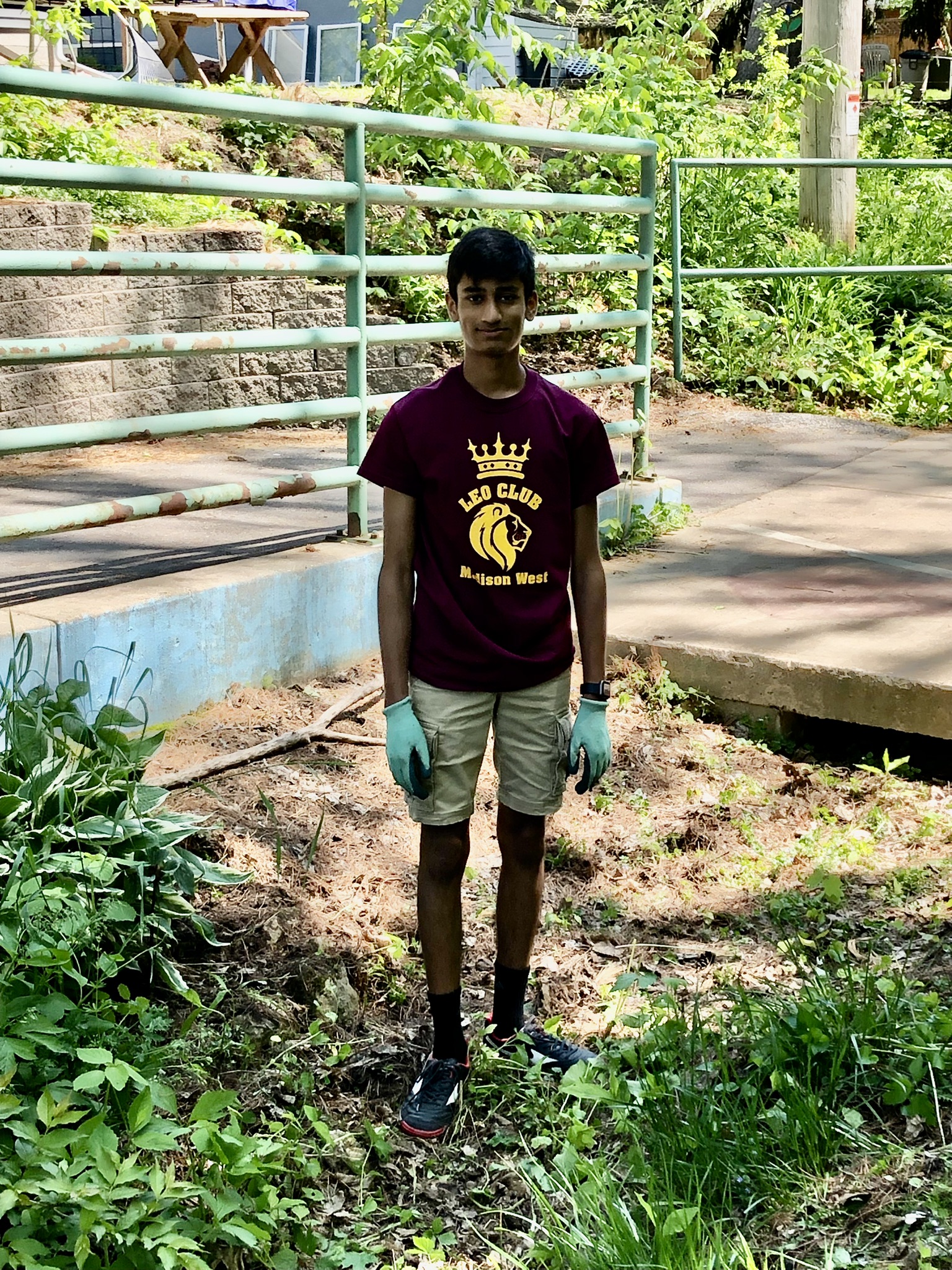

Here's some of the May 20th crew. I forgot to take a group picture. On the bottom row (left to right) are West High Leo club members Rajeev, Frosya, and Nurlybek. Top row (left to right) are Alexis(daughter Tilly not pictured here), Melissa, and Gregory.  

Others not pictured, besides Ann and me, are Sandy P., Connie and her daughter Olivia, Laura, Jim, Ann N. and Alice. A special thank you to Jim for the 16 strawberry plants, replacing the original patch that disappeared several years ago. I also appreciate you joining us while being from a nearby neighborhood.  


Caring for Prospect Gardens provides opportunities for socializing and making new connections while catching up with what's happening in the lives of regular volunteers. Welcome back Ann N.  That bleeding heart you donated several years ago is thriving. Thanks for offering columbines which we will transplant in the fall.


Here's Tilly (on the left) and Olivia on a well earned break. These two five year-olds and their mothers removed catchweed bedstraw. The four worked as a team. Alexis and Connie pulled out handfuls of the sticky bedstraw and handed it to Tilly and Olivia. They in turn put the weeds into the wheelbarrow.  


Tilly asked a lot of questions about plants. I showed her how jewel weed's liquid helps reduces the itch on skin once exposed to stinging nettles. 


Stinging nettles don't deserve the bad rap suggested by their name. A few years ago I learned from a young man collecting stinging nettles at Prospect Gardens, that the immature plants are excellent in salads and that mature leaves make a flavorful but strong tea. He also puts them in lasagna. 


Thank you Tilly and Olivia for being with us. Your presence added so much to our collective effervescence. You and your moms are welcomed back anytime.


Here's industrious Frosya, Vice-President of the Leo Club at West High School, removing weeds from a rocky slope. Frosya has mastered maintaining balance while weeding on a slope. She has volunteered at Prospect Gardens for several seasons. Thank you. 


Frosya is a graduating West High senior and will be attending Princeton. Well done.


Here's Rajeev. He's a sophomore and will be the Leo Club president next year.  I mention his presidency, in hopes that the Leo Club will continue lending a helping hand during his term and into the future. Having members of the current generation with us adds so much to my sense of collective effervescence.   
Thank you Gregory for coming again. Maybe a millennial generation member ? I  appreciate you spending a Saturday morning caring for Prospect Gardens which means you biking from the Tenney Park area.  

Our weeding efforts reminded me of a Carl Sandburg poem about weeds. Even though we are not a vegetable garden, his message about the need for vigilance applies to Prospect Gardens. 


Weeds

From the time of the early radishes
To the time of the standing corn
Sleepy Henry Hackerman hoes.

There are laws in the village against weeds.
The law says a weed is wrong and shall be killed.
The weeds say life is a white and lovely thing
And the weeds come on and on in irresistible regiments. 
Sleepy Henry Hackerman hoes; and the village law uttering a ban on
weeds is unchangeable law.

Here's a picture illustrating another benefit of prairie gardens, followed by a Robert Frost poem about the importance of human connections.  Prospect Gardens is just one of several prairie gardens along the Southwest Path with the last one located around the pedestrian bridge over the beltline. These are all maintained by volunteers.

David and his daughter are sitting besides the small prairie that David installed and now tends at the corner of Commonwealth and the Path. A perfect place for father and daughter to be under an umbrella on a sunny day. I passed by on my daily walk. I stopped, we exchanged greetings. I learned that David is faced with aggressive black-eyed susan spreading rapidly throughout the prairie. He will be taking remedial action. Thanks David for taking care of that small prairie. 

Likewise during the May 20th work session, two neighbors stopped for a chat. Another rode by on her bike and shouted a greeting. 

A Time to Talk

When a friend calls to me from the road

And slows his horse to a meaning walk,

I don’t stand still and look around

On all the hills I haven’t hoed,

And shout from where I am, What is it?

No, not as there is a time to talk.

I thrust my hoe in the mellow ground,

Blade-end up and five feet tall,

And plod: I go up to the stone wall

For a friendly visit.

Prospect Gardens over the years has provided many opportunities "for a friendly visit."  There is always time to talk during Prospect Garden work sessions. Come join us if you live in Madison.  You too may experience collective effervescence while having a friendly visit. 

Susan Herndon Photo
This spring has also been a season of wonder and awe. Early in May, on a walk on the path along the northern shores of Lake Wingra (Monroe Street Arboretum) I witnessed a pair of adult cranes and two chicks.  I watched with wonder and awe as the two colts(another name for the chicks) tumbled along after their parents. 

I told a neighbor Susan about the chicks. She and her husband, Rick, observed the crane family walking along the path. Susan and Rick were so close to one of the adults that she could have reached out and touched it. Susan resisted the urge.

On a walk with Ann, we watched how the two parents scratched the dirt with their beaks and how the chicks scampered over and ate what was revealed.  (After Ann googled, we learned the chicks are called "colts" because of their long legs.)

More occasions for wonder and awe were watching a pair of Canadian geese, as the female hatched a brood of five goslings. The adults appear to be same ones that have returned to the storm water pond along Monroe Street for several years. 

While the female sat on the nest, the gander stood by, seeming to be on guard. He joined the female after the five were hatched and often took the lead as they swam across the pond. The family stayed for several weeks during which Ann and I visited several times. Geese often move their brood from the hatching site to a larger body of water which in this case would be nearby Lake Wingra. 

Vilas Park, also on the shores of Lake Wingra, has several families of geese; eating, resting, or leisurely swimming on the lagoon. I spotted a brood that to my great surprise was at least 16 goslings. I lost count at 16. I watched with awe as the adults waddled into the lagoon and the large brood followed. The last one scrambled more quickly than the others. Perhaps thinking "Don't forget me." 

Spring at Prospect Gardens always provides opportunities for awe and wonder. This spring it was the injured cherry tree with the deep scar on its trunk. A few years ago I decided against removing the tree. A wise decision because this season the tree had more blossoms than ever.  Now the tree is filled with small green cherries, promising an abundance of ripe cherries for humans and birds. 

Official summer will arrive in a month.  Meanwhile, more opportunities to experience collective effervescence, awe, and wonder await us.  Be well. 


Tuesday, February 21, 2023

Resilience and Aging

First Unitarian Society's (FUS) theme for February is resilience which is one prompt for these reflections. Another prompt is walking through snow covered Prospect Gardens and noticing subtle examples of resilience, which I will comment on later in this entry.

You may be asking what does the crystal ball and the next picture have to do with resilience? Well actually not much if you totally accept the Webster's dictionary definition of resilience as "an ability to recover from or adjust easily to adversity or change."  This crystal ball, a holiday gift from Laura, a long time Prospect Gardens volunteer, positively affects my mornings as I patiently wait for winter to morph into spring.   

The morning sun streams through the large southern window of my office, catching the crystal. The orb does its magic: little circles of refracted colors are projected on the ceiling and walls. I feel joy watching this impermanent phenomena.  

I invite you to reflect on the following poem from the FUS monthly newsletter that introduced the theme of resilience

won’t you celebrate with me 

By Lucille Clifton (1993)

won't you celebrate with me

what i have shaped into

a kind of life? i had no model.

born in babylon

both nonwhite and woman

what did i see to be except myself?

i made it up

here on this bridge between

starshine and clay,

my one hand holding tight

my other hand; come celebrate

with me that everyday

something has tried to kill me

and has failed.


I will share with you the result of reflecting on Clifton's poem and on a Sunday message about resilience by Rev. Kelly Crocker, one of our two FUS co-senior ministers. From Googling the term, I learned that resilience is very popular, but quantitative researchers are concerned that the concept lacks rigor, which makes measurement difficult. As a qualitative trained evaluator, I am less concerned about this lack of rigor. 


With that said, there is general consensus in research and popular literature, as Rev. Kelly mentioned in her February 19th message, that one of the important factors enabling resilience is meaningful social connections. Mayo Clinic on its website lists six tips to increase your resilience. Top of the list is  Get connected: build  strong, positive relationships with loved ones and friends so you have support, guidance and acceptance in good and bad times. Mayo also encourages developing other important connections by volunteering or joining a faith or spiritual community.


Throughout much of my life I have been fortunate to have strong supportive connections; friends, family members, neighbors, and colleagues. Although, I didn't have any close childhood friends. I was a timid kid plus chores on our family farm started at an early age and took up much of my time. Fun time was with my brothers and sisters, close to my age in a family of 14. My older sister Angie was a close playmate, along with three brothers. 


For six years, I attended Polandi, a one room rural school, a few miles across the fields from our family farm. Although Nora, Carolyn, and Marilyn were my grade level classmates during all those six years, I was not close to them. Polandi closed after I completed sixth grade.


8th Grade: Me Far Right (white shirt)
Connections with friends began to change as a seventh grader in the K-8 up-to-date Pulaski Elementary School. I can't quite explain the change except an increase in self-esteem because of Mrs. Parker, my seventh grade teacher, and Mr. Ripley, my eighth grade teacher.  With their support, I excelled academically which boosted self-esteem. Plus Mr. Ripley was my first male role model outside my family. 

By the time I graduated from high school I had many friends, an honors student, and in many non-athletic activities. I was on the Junior prom court (the only non-jock), Student Council President, in a school play as a priest, and sold ads for the Pulaski Newspaper. The Pulaski News was and continues to be a community paper staffed by high school journalism students, like me.  

Friends were important during the late 1960s as I completed undergraduate and graduate degrees at UW-Madison. Friends and colleagues supported me throughout my 40+ year educational career and during major transitions. I lived in Oregon, Indiana, and Massachusetts before returning to Madison in 1986 with Ann, my wife, and our then 21 month year old daughter, Emily. She was born on November 13, 1984 in Lawrence, Massachusetts, the town adjacent to Andover where we lived.
   

One of my favorite memories from the middle 1970s is my friendship with Sterling and specifically when I met him while completing special education certification at Oregon College of Education, Monmouth. On a cold Oregon rainy day after the first class I waited in front of a plate glass door staring at the heavy rain. I heard from behind me, "You just must open the door and step into it."  He was a great support during those Monmouth days and our friendship continues.


Ann joined my journey in 1975. My friend Kay arranged a blind date in December 1975 when I returned to WI from Oregon for a visit with Kay and her husband, Don. On May 25th, we will celebrate our 44th anniversary. Ann is a loving partner and major supporter, starting when she moved to Oregon in the summer of 1976 and continuing after we married in 1979. She was at my side when we left my beloved Oregon in 1980 and moved to Indiana to attend Indiana University, Bloomington where I earned an Ed.D in 1983. Bloomington's hot and muggy summers were just part of our adjustment. Next we went east to Andover, Massachusetts and then back to Madison.


Ann and I made it a point to celebrate important events during our journey. A few memorable celebrations are: Emily's birth, her Child Dedication at FUS, (attended by many family members and friends), a 2015 Blasczyk family reunion, wedding anniversaries of sisters and brothers, annual UW Homecomings at our home with my two brothers, their wives and four friends, and celebrating each of Emily's educational milestones. The Ann Arbor celebration of Emily's graduation from the University of Michigan with a Masters in Survey Methodology was especially joyful. My brother Tom, his wife, Todd, and brother, Lou joined us. 


Today friends (some since about 1970) continue to be important connections, along with family members. I am in regular contact in person and/or by phone with my five remaining siblings.  We occasionally visit my sister, Theresa, who is in a Milwaukee assisted living facility but wish it could be more often.


 I am now considered the family historian. I did extensive family research using Ancestry.com, other sources, plus family interviews that resulted in 10 CDs of family stories. These were shared with family members in 2015 and are now part of the Wisconsin Historical Society collection.  


Three small groups are within my current supportive network. My FUS Chalice group has been meeting, twice monthly during the church year, for almost 20 years. During the height of the 2020 pandemic, Chalice was a critical support as we met weekly on Zoom. We now meet in person, reading and discussing Karia Jewel Lingo's We Were Made for These Times. 


The other two monthly groups are affiliated with the Madison Insight Meditation group. Eight of us belong to a kalyāṇa-mitta, Sanskrit for “spiritual friends.” We are reading and discussing The Book of Joy, featuring discussions between the Dalai Lama and Desmond Tutu. The "Going Forth" group of nine focuses on topics and issues related to aging, including death and dying.


Since Prospect Gardens began in 2010 I have enjoyed connections with numerous volunteers. Some have been only for a few days while others have extended over the years. Thank you all for contributing to my well being.  


These days I am aware that letting go increases resilience needed to navigate aging. Danna Faulds' poem makes the point about giving up control, the opposite of letting go. Tara Brach, international known meditation teacher, stresses "radical acceptance", another form of letting go.

Allow By Danna Faulds

There is no controlling life.
Try corralling a lightning bolt,
containing a tornado. Dam a
stream and it will create a new
channel. Resist, and the tide
will sweep you off your feet.
Allow, and grace will carry
you to higher ground. The only
safety lies in letting it all in –
the wild and the weak; fear,
fantasies, failures and success.
When loss rips off the doors of
the heart, or sadness veils your
vision with despair, practice
becomes simply bearing the truth.
In the choice to let go of your
known way of being, the whole
world is revealed to your new eyes.

My current situation with Prospect Gardens is one small (and less dramatic) example of allowing, accepting, and letting go as I age. I have been the only crew chief since the initial development of the Gardens in 2010, responsible for recruiting volunteers, working with them on site, and for making decisions affecting the Gardens. I want to step back as crew chief after this season. I am now searching for a replacement while considering an option for a small team that takes on the crew chief’s tasks rather than one individual. 

Letting go of Prospect Gardens is not easy for me. I just can't walk away and see what happens. I try not to think about this beautiful site with its many environmental benefits disappearing into invasive plants and weeds. Maddie Dumas, City Engineering's Greenway  Vegetation assures me that she will do her best to ensure that this will not happen if DMNA/Regent Association cannot maintain the Gardens. Maddie has been so helpful over the years, with advice and providing an Operation Fresh Start Team to help maintain the Gardens.

 Tibi, a potential future volunteer, reminded me that the Gardens after 13 years are resilient -- prairie plants will survive and the strategy may be to support them. I am comforted by Tibi's suggestion and Maddie's assurances.

Tibi's wise advise is underscored by subtle examples of resilience I recently noticed on a walk through the snow covered site.  Here are four pictures of what I discovered along with quotations about resilience.

Milkweed Pod - Seeds Dispersed


“The oak fought the wind and was broken, the willow bent when it must and survived.” Robert Jordan, The Fires of Heaven


Forsythia Bud


“We must be willing to let go of the life we planned so as to have the life that is waiting for us.” ― Joseph Campbell


Budding Japanese Sumac 


"I can be changed by what happens to me. But I refuse to be reduced by it.” ― Maya Angelou


Budding Pussy Willow 


When we learn how to become resilient, we learn how to embrace the beautifully broad spectrum of the human experience.”Jaeda Dewalt


Here I am in the present moment with the sun melting the snow and with, at least for today, a hint of spring in the air. The sun is higher in the sky so the crystal orb is no longer casting its spell. May you be well and enjoy the remainder of winter and the onset of spring.